
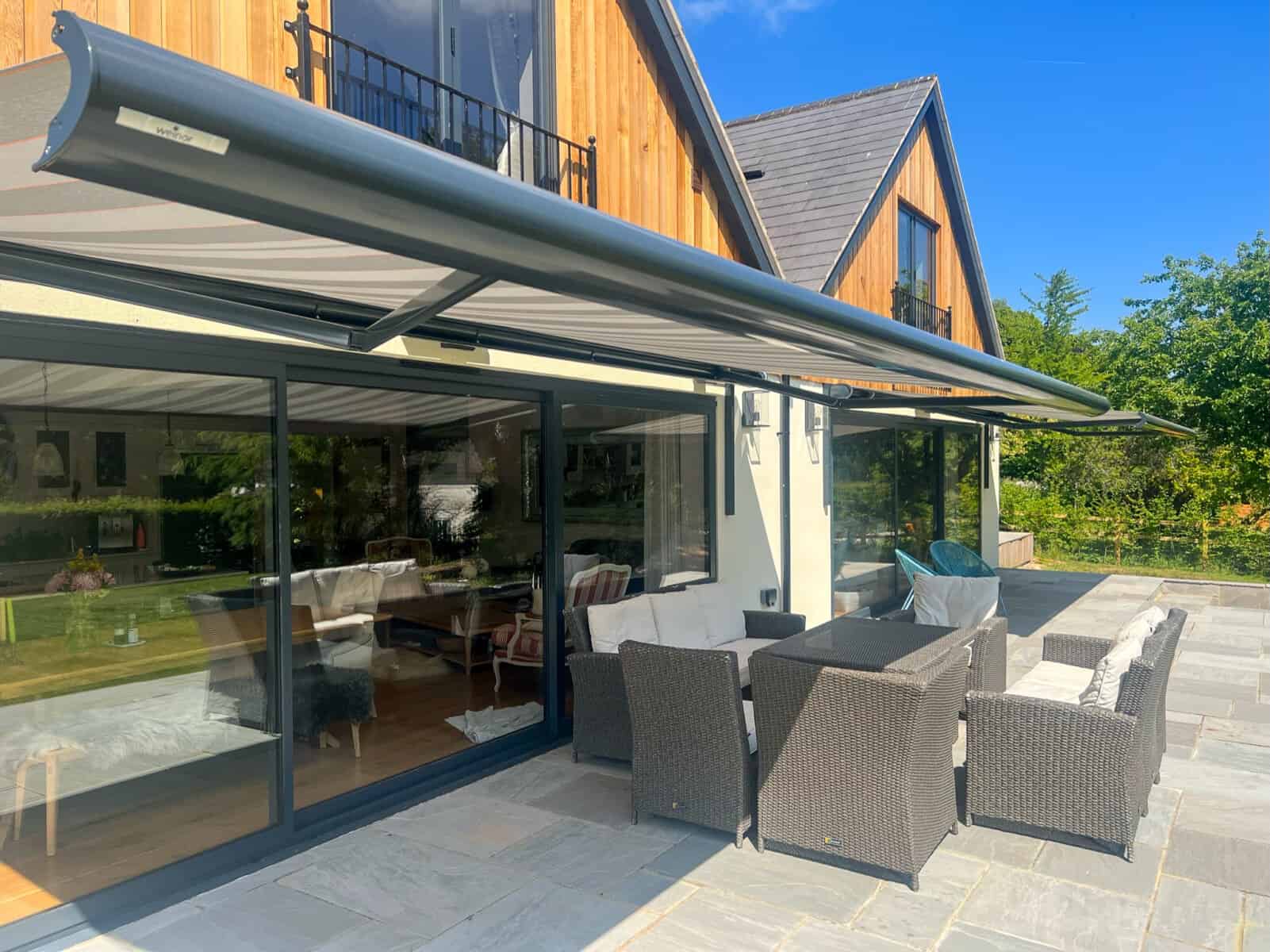
Weinor awnings can integrate directly with modern smart home systems through compatible motorisation and control platforms such as Somfy TaHoma and BiConnect. This allows homeowners to control their outdoor shading using a smartphone app, voice commands, or automated schedules based on the time of day or changing weather conditions.
With smart home integration, a Weinor awning becomes more than a simple shade solution. It becomes part of a connected living environment, helping to improve comfort, energy efficiency, and protection for patios and outdoor spaces. Once connected to a central control system, the awning can communicate with other smart devices around the home, creating a more responsive and convenient setup.
For most Weinor models fitted with compatible motors and sensors, the integration process is straightforward. Homeowners can choose from a range of control options, from simple remote operation to fully automated systems that adjust automatically to sun intensity, wind speed, or temperature changes.
Key Takeaways
- Weinor awnings integrate with smart home platforms through Somfy and BiConnect systems for convenient wireless control
- Weather sensors can automate operation, allowing awnings to react to sun, wind, and temperature changes without manual input
- Smart controls enable management via smartphone apps, voice assistants, and scheduled routines, improving everyday convenience
Why Integrate Weinor Awnings with Smart Home Systems?
Connecting Weinor awnings to a smart home system adds a layer of practical automation that responds to changing weather while helping to reduce energy use. Instead of manually adjusting your awning throughout the day, the system can automatically adapt to sunlight, wind, or temperature.
For homeowners, this means outdoor spaces feel like a natural extension of the home. With the right setup, your awning can operate quietly in the background — maintaining shade, protecting your patio, and improving comfort without constant manual control.
Benefits of Smart Home Integration
Smart home integration allows Weinor awnings to be controlled using smartphones, tablets, or voice commands. Systems such as BiConnect work with Matter-compatible smart home platforms, making it easy to operate awnings remotely or create automated schedules.
This level of connectivity is particularly useful when you’re away from home. If the weather changes unexpectedly, awnings can be adjusted remotely to protect outdoor furniture or maintain shade over a patio area. Multiple awnings across a property can also be managed together through a single control interface.
For homes already using automation systems powered by Somfy motors, integration creates a seamless control experience. Awnings can be included in wider home routines — for example, retracting automatically when a security system is activated or adjusting as part of a daily schedule.
Key advantages include:
- Remote operation via smartphone apps
- Voice control compatibility
- Integration with existing smart home automation systems
- Centralised control of multiple awnings
- Programmable schedules for automated operation
Enhancing Outdoor Comfort and Usability
Automated Weinor awnings make outdoor spaces more comfortable and usable throughout the year by reacting instantly to changing conditions.
Sun sensors detect increasing UV intensity and extend the awning automatically to maintain consistent shade across a patio or terrace. This helps keep seating areas cooler without the need for constant manual adjustment.
At the same time, wind sensors retract the awning if gusts reach unsafe levels, protecting the fabric and mechanism from potential damage. Rain sensors can also trigger retraction to keep the awning dry and prevent sudden showers from affecting outdoor furniture.
Because the system works automatically, homeowners don’t need to constantly monitor the weather. Whether you’re at home or away, the awning responds to conditions as they change.
Together, these sensors create a responsive outdoor environment that suits the often unpredictable British weather. The awning extends when shade is needed and retracts before strong winds or rain, helping protect both the awning and the space beneath it.
Energy Efficiency and Automated Shading
Automated shading can also play an important role in improving energy efficiency. By blocking solar heat before it enters the home, Weinor awnings reduce the amount of heat passing through windows and into indoor living spaces.
When integrated with a smart home system, awnings can coordinate with indoor climate control. For example, the awning may extend automatically when indoor temperatures rise or when direct sunlight hits south-facing windows.
This targeted shading helps reduce reliance on air conditioning or fans during warmer months. In fact, external shading systems can be more effective than internal blinds at preventing solar heat gain.
Smart scheduling can also follow the sun’s movement across the property. South-facing areas receive shade during the hottest afternoon hours, while east-facing windows are protected from strong morning sun.
Some smart home systems even allow homeowners to monitor the impact of automated shading on overall energy consumption. Over time, this data helps fine-tune awning schedules to maximise efficiency based on real usage patterns and seasonal weather changes.
Smart Home Compatibility and Control Options
Weinor awnings can connect with leading smart home platforms using two main control systems: Somfy motors and weinor BiConnect. These technologies allow homeowners to manage their awnings through voice commands, mobile apps, and automated routines across platforms such as Apple HomeKit, Amazon Alexa, Google Assistant, and Samsung SmartThings.
For homeowners working with Winchester Awnings, this means outdoor shading can be seamlessly integrated into an existing smart home setup, making daily operation simple and convenient.
Supported Smart Home Platforms
The weinor BiConnect Box acts as the central gateway that connects Weinor products to Matter-compatible smart home systems. Through this connection, awnings can integrate directly with platforms including Apple HomeKit, Amazon Alexa, Google Home, and Samsung SmartThings. Because Matter is designed as a universal smart home standard, it allows devices from different manufacturers to work together more easily.
This means homeowners can control their Weinor awnings through their preferred smart home ecosystem without needing multiple apps or additional proprietary hubs.
For awnings powered by Somfy motors, integration works slightly differently. These systems use IO-Homecontrol or Somfy RTS (Radio Technology Somfy) to communicate wirelessly. The Somfy TaHoma hub acts as the bridge between the awning motor and the wider smart home system, enabling integration with other connected devices throughout the property.
Support for the Matter protocol through BiConnect is a major advantage. It simplifies installation, improves cross-platform compatibility, and ensures Weinor awnings can easily work alongside other modern smart home devices.
Voice Control Capabilities
Voice assistants make controlling Weinor awnings simple and hands-free. Through Siri, Amazon Alexa, or Google Assistant, homeowners can extend or retract their awning using straightforward voice commands.
For example, a user might say:
- “Extend the patio awning”
- “Retract the garden awning”
- “Close the terrace shade”
Many smart home platforms also allow awnings to be included in automated scenes or routines. For instance, an evening routine might retract the awning, turn on outdoor lighting, and adjust indoor temperature settings at the same time.
This type of control is particularly convenient when you’re entertaining outdoors, cooking, or relaxing on the patio and don’t want to reach for a remote or phone.
Remote Access and Mobile Apps
Smartphone control is another key benefit of smart home-connected Weinor awnings. Using the weinor BiConnect app, homeowners can operate their awnings from anywhere with an internet connection.
The app allows users to:
- Check the current position of the awning
- Extend or retract it remotely
- Create automated schedules based on time of day or sun position
For Somfy-powered systems, the Somfy TaHoma app provides similar functionality. It also allows multiple awnings or devices to be grouped together, so they can be controlled simultaneously.
Both apps offer clear, user-friendly interfaces with real-time updates. If weather sensors detect strong winds or intense sunlight, homeowners can receive notifications when the awning adjusts automatically.
Smart Home Hubs and Ecosystems
Weinor awnings can also operate as part of a wider smart home ecosystem, connecting to other devices and automation systems.
The BiConnect Box already acts as a dedicated hub for Weinor products, while its Matter compatibility allows it to communicate with broader smart home platforms. In some systems, third-party bridges can also connect Weinor awnings with Z-Wave or Zigbee networks, enabling them to work alongside other smart devices in the home.
For more advanced automation, IFTTT (If This Then That) integrations can be used to create custom triggers. For example, an awning could extend automatically when a weather forecast predicts strong sun, or retract when wind speeds increase.
By connecting awnings to the wider smart home system, they become more than just shading devices. Instead, they operate as responsive elements within a fully connected home environment — improving comfort, protection, and everyday convenience.
Step-by-Step Guide to Integrating Weinor Awnings
Weinor awnings can be integrated with leading smart home systems using the weinor BiConnect gateway, which connects the awning to platforms such as Apple HomeKit, Google Nest, Amazon Alexa, and Samsung SmartThings.
In most cases, the process involves checking compatibility, connecting the awning through the control unit, and setting up automation routines that make everyday use easier.
For customers working with Winchester Awnings, this integration is typically straightforward when the awning is fitted with compatible motors and controls.
Checking Compatibility with Smart Home Devices
The BiConnect Box is the key component that links Weinor awnings to a wider smart home system. It supports the Matter protocol, which allows devices from different manufacturers to work together across platforms such as Apple HomeKit, Google Nest, Amazon Alexa, and Samsung SmartThings.
Before installing the system, it’s important to confirm that your existing smart home setup supports Matter-enabled devices. Most modern smart home hubs released after 2022 already include this capability.
Weinor motorised awnings also require a compatible control system, usually powered by Somfy motors, which can communicate with the BiConnect gateway.
A stable 2.4GHz Wi-Fi connection is also essential. The BiConnect box needs to remain within range of your wireless router to maintain a reliable connection. If you’re using older smart home equipment, a quick firmware update may be needed so it can communicate with newer Matter-compatible devices.
Connecting Weinor Awnings to Your System
Once compatibility is confirmed, the integration process is relatively simple.
The BiConnect box is installed in a location with a strong Wi-Fi signal and within range of the awning motors. From there, it connects to the home network using the weinor BiConnect mobile app, available on both iOS and Android.
During setup, the app guides users through the pairing process. This usually involves scanning a QR code on the BiConnect unit. After connecting to Wi-Fi, the gateway automatically searches for compatible Weinor products nearby.
Each awning can then be named within the app, making it easy to identify and control them later within your smart home system.
Once this initial setup is complete, the BiConnect gateway can be linked to your chosen platform. For example:
- Apple HomeKit: Add the device by scanning the Matter code in the Home app
- Amazon Alexa or Google Nest: Follow the device setup within the respective app
- Samsung SmartThings: Pair the gateway through the SmartThings device menu
After linking the system, the awnings appear as controllable devices within the smart home interface.
Automation Routines and Scheduling
Smart home integration makes it possible to automate Weinor awnings based on time, weather conditions, or sensor inputs.
For example, you might schedule the awning to extend in the afternoon when the sun reaches the patio, and retract again later in the evening. These routines can run automatically every day or follow a weekly schedule.
Voice control through Alexa, Google Assistant, or Siri also allows hands-free operation. Simple commands such as “extend the patio awning” or “close all awnings” can adjust the system instantly.
Many smart home systems also support additional features such as geofencing, where awnings retract automatically when the last person leaves the property. Weather-based automation can also retract the awning if high winds or heavy rain are detected.
These routines help maintain comfort outdoors while also protecting the awning when conditions change.
Troubleshooting Common Integration Issues
Most integration issues are simple to resolve and are often related to network connectivity.
If the awning isn’t responding to commands, the first step is to check the Wi-Fi signal strength near the BiConnect box. Moving the gateway closer to the router or installing a Wi-Fi extender can often improve reliability.
It’s also worth checking that the Somfy motor connections are working correctly and that the BiConnect gateway recognises the awning within the system. The weinor app usually displays the connection status for each device.
If commands feel slow or delayed, this may be caused by network congestion. Adjusting router settings or prioritising smart home devices through Quality of Service (QoS) can improve response times.
Finally, keeping the BiConnect gateway and smart home hub firmware updated helps ensure continued compatibility as smart home technology evolves.
Advanced Features and Best Practices for Smart Outdoor Living
Modern smart awning systems combine automation, comfort, and protection to help homeowners get more from their outdoor spaces. When features such as weather sensors, lighting, and automation routines are configured correctly, they not only improve usability but also help protect the awning and extend its lifespan.
For homeowners choosing Weinor awnings through Winchester Awnings, these advanced features can transform a patio or terrace into a smarter, more comfortable outdoor living area.
Weather Sensors and Automated Protection
Weather sensors play a crucial role in protecting motorised awnings from changing conditions.
Wind sensors automatically retract the awning when gusts reach unsafe levels, typically around 20–25 mph, helping prevent damage to the fabric or frame. Sun sensors monitor light intensity and extend the awning when sunlight becomes strong, maintaining consistent shade throughout the day.
Weinor systems can combine both sensors to create a responsive protection system. Wind sensors always take priority, ensuring the awning retracts immediately if conditions become unsafe. Meanwhile, sun sensors help regulate shade levels and can even work alongside smart thermostats such as Google Nest to reduce indoor heat gain by blocking direct sunlight before it enters the home.
Correct installation is important for reliable sensor performance. Wind sensors should be positioned where they can detect prevailing wind conditions, while sun sensors should face the same direction as the awning. Many Winchester Awnings installers also recommend occasional calibration checks to keep sensors working accurately.
LED Lighting and Additional Accessories
Integrated LED lighting is one of the most popular upgrades for modern awning systems. Built directly into the cassette or support arms, LED strips provide soft, ambient lighting without the need for additional outdoor fixtures.
These lighting systems can often be controlled through the same smart home platform used for the awning itself, allowing homeowners to adjust brightness or switch lighting scenes with a smartphone or voice command.
Some setups also support integration with systems like Philips Hue, making it possible to change colour temperature or create lighting scenes. Warmer tones can create a relaxed evening atmosphere, while brighter lighting works well for outdoor dining or entertaining.
For cooler evenings, infrared patio heaters can also be added to the awning area. These heaters are usually mounted to nearby walls or the awning frame, providing targeted warmth that extends the outdoor season in the British climate. When connected to smart thermostats, heating levels can adjust automatically based on outdoor temperature.
Maximising Security and Privacy
Smart awnings can also contribute to home security and privacy.
Automation schedules can be programmed to extend or retract the awning at different times, creating the appearance of activity even when the home is empty. When integrated with wider security systems, awnings can also retract automatically if an alarm is triggered, helping prevent damage during emergencies.
For additional privacy, many homeowners choose front drop screens that attach to the front bar of the awning. These screens create a more enclosed outdoor space, reducing visibility from neighbouring properties while still allowing airflow.
Combined with motorised blinds or Somfy-controlled shading, these features allow quick adjustments depending on the level of shade or privacy required.
Weinor awnings are also built with powder-coated aluminium frames, providing durable construction that withstands daily use and outdoor exposure while maintaining a clean appearance for years.
Maintaining System Longevity and Performance
Regular maintenance helps ensure smart awning systems continue to operate smoothly.
Cleaning the awning fabric once or twice a year helps prevent dirt build-up that can place unnecessary strain on the motor during operation. In most cases, a mild soap solution and soft brush are enough to keep the fabric in good condition without damaging its protective coating.
Motor systems — particularly Somfy motors — typically require minimal servicing, but an occasional professional inspection can confirm everything is operating correctly. It’s also worth checking that weather sensors respond properly and that any battery backup systems remain functional in case of power outages.
Smart features should also be kept up to date. Firmware updates for the BiConnect gateway, Somfy controls, or smart home apps ensure continued compatibility with evolving smart home platforms and can often introduce performance improvements.
Finally, keeping sensors clean and correctly calibrated helps prevent unnecessary triggers. For example, wind sensors should be tested periodically to confirm safe thresholds, while sun sensors should remain free from dirt or debris that could affect light readings.
Smart Home Awnings in Hampshire
Integrating Weinor awnings with a smart home system is a simple way to make outdoor living more comfortable, convenient, and energy-efficient. With automated shading, weather sensors, and smart controls, your patio or terrace becomes a fully connected part of your home — adapting automatically to changing conditions while protecting your outdoor space.
If you’re considering upgrading to motorised or smart awnings, the team at Winchester Awnings can help. As experienced specialists in Weinor awnings and smart outdoor shading solutions, we can guide you through the best options for your home, from installation to smart home integration.
For homeowners looking to extend automation indoors as well, our sister company Winchester Blinds also offers a wide range of automated blinds and shutters that can integrate with modern smart home systems.
To learn more or to discuss your project, get in touch with Winchester Awnings today and discover how smart shading can transform both your indoor and outdoor spaces.
We provide a 10-year guarantee on all residential and commercial awnings, giving you long-term peace of mind — and our team is always on hand to assist with maintenance, servicing, and any mechanical issues to keep your awning performing at its best. Get in touch with us at hello@winchesterawnings.com to see how we can help you or your home or business.
Available Services
- No Obligation Quotations: Customers can obtain detailed estimates without any commitment.
- Expert Advice: Professional consultation to find the perfect awning solution.
- Professional Fitting: Installation is handled by trained and experienced professionals.
Additional Benefits
- Made to Measure: Each awning is custom-made to fit specific needs.
- Family Run Business: Personalised service with a focus on customer satisfaction.
- Survey Service: Initial surveys to ensure precise measurements and perfect fit.
Frequently Asked Questions
What are the steps to synchronise Weinor awnings with a home automation system?
The synchronisation process begins with installing the BiConnect gateway, which serves as the connection point between Weinor products and Matter-compatible smart home systems. Users must ensure their Weinor awning features Somfy motorisation, as this forms the foundation for smart integration.
After installing the gateway, the BiConnect app guides users through pairing their awning with the chosen smart home platform. The process typically involves scanning for devices within the smart home system and authorising the connection through both applications.
Once paired, users configure automation rules, sensor responses, and control preferences within their smart home platform. This final step allows the awning to respond automatically to programmed conditions such as time schedules or weather changes.
Can Weinor awnings be controlled through voice-activated devices, and if so, how?
Weinor awnings equipped with BiConnect support voice control through major smart home ecosystems including Apple HomeKit, Amazon Alexa, Google Nest, and Samsung SmartThings. Voice commands work by communicating through the smart home platform, which then sends instructions to the BiConnect gateway.
Users can issue commands such as extending or retracting the awning by speaking to their voice assistant. The specific phrasing varies by platform, but typically involves naming the awning and stating the desired action.
For optimal voice control functionality, the awning must be properly named within the smart home system and assigned to appropriate rooms or zones. This organisation ensures the voice assistant recognises which device to control.
What are the benefits of integrating Weinor awnings into a smart home environment?
Smart integration enables automated responses to environmental conditions through sensor inputs, protecting the awning from wind damage and optimising shade coverage without manual intervention. This automation extends the lifespan of the awning whilst reducing energy consumption by maintaining optimal temperature control.
Integration provides remote access to awning controls from anywhere through smartphone applications. Users can adjust their outdoor spaces before arriving home or respond to unexpected weather whilst away from the property.
The system allows coordination between multiple outdoor elements including lighting and heating, creating unified control over the entire outdoor living space. This centralised management simplifies operation and enables complex automation scenarios tailored to individual preferences.
Are there specific smart home platforms that are compatible with Weinor awnings, and what are they?
Weinor awnings connect to smart home systems through the BiConnect gateway, which supports Matter protocol compatibility. This standard enables integration with Apple HomeKit, allowing control through Siri and the Apple Home app on iOS devices.
Amazon Alexa integration permits voice control through Echo devices and management via the Alexa app. Google Nest compatibility provides access through Google Assistant and the Google Home platform.
Samsung SmartThings support extends control to Samsung ecosystem devices and the SmartThings application. The Matter protocol ensures future compatibility with emerging smart home platforms that adopt this universal standard.
What kind of sensors can be used to enhance the functionality of smart Weinor awnings?
Wind sensors protect the awning by automatically retracting it when wind speeds exceed safe thresholds, preventing structural damage during unexpected weather events. These sensors continuously monitor conditions and respond immediately to dangerous wind levels.
Sun sensors detect sunlight intensity and can trigger automatic extension during bright conditions, maintaining comfortable outdoor temperatures whilst reducing indoor heat gain. This automation optimises energy efficiency by reducing air conditioning demands.
Combined sensor systems work together to create intelligent responses based on multiple environmental factors. Some installations incorporate rain sensors or temperature monitors to refine automation rules further.
How can I ensure secure and reliable connectivity between my smart home system and Weinor awnings?
Maintaining a strong Wi-Fi signal at the BiConnect gateway location forms the foundation of reliable connectivity. The gateway requires stable network access to communicate effectively with both the awning motors and the smart home platform.
Regular firmware updates for both the BiConnect gateway and Somfy motors ensure security patches and performance improvements are applied. Users should enable automatic updates where available or check for updates monthly through the BiConnect app.
Network security measures including WPA3 encryption and strong passwords protect the smart home system from unauthorised access. Separating IoT devices onto a dedicated network segment adds an additional security layer whilst maintaining functionality.