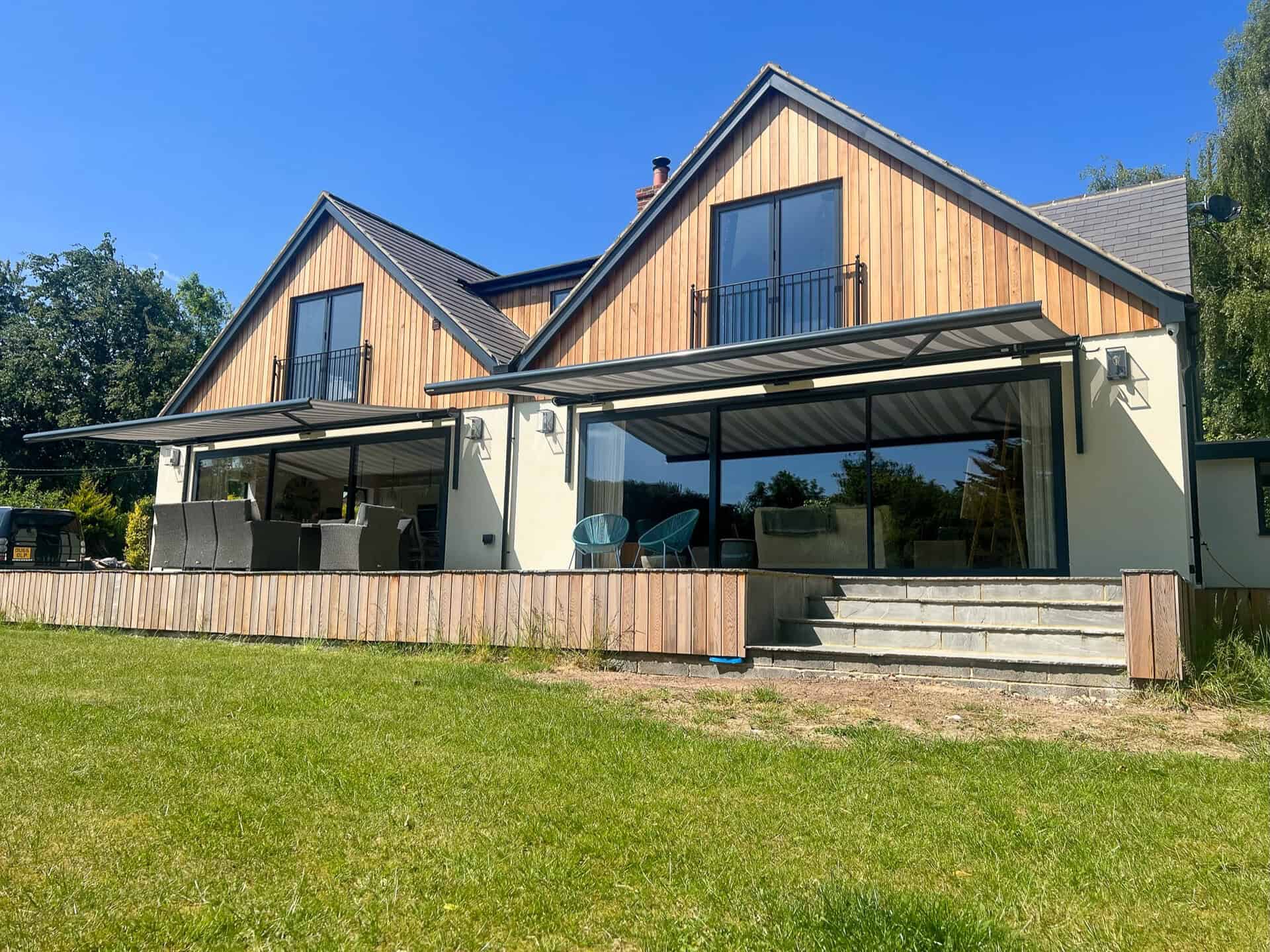
Adding an awning is one of the most effective ways to make your garden, patio, terrace or commercial frontage more usable throughout the year. Whether you are looking for shade on a sunny south-facing patio, shelter for outdoor dining, or a smarter shopfront awning for your business, one of the first questions many people ask is: do you need planning permission for an awning in Winchester?
In many cases, a domestic retractable awning fitted to the rear of a home will not need formal planning permission. However, there are important exceptions, especially in areas such as Winchester city centre, conservation areas, listed buildings, period properties and commercial premises. The answer depends on where the awning is being installed, how large it is, whether it is fixed or retractable, whether it affects the appearance of the building, and whether it includes branding or projects over a public pavement.
This guide explains what homeowners and businesses in Winchester should consider before installing an awning.
Do Residential Awnings Usually Need Planning Permission?
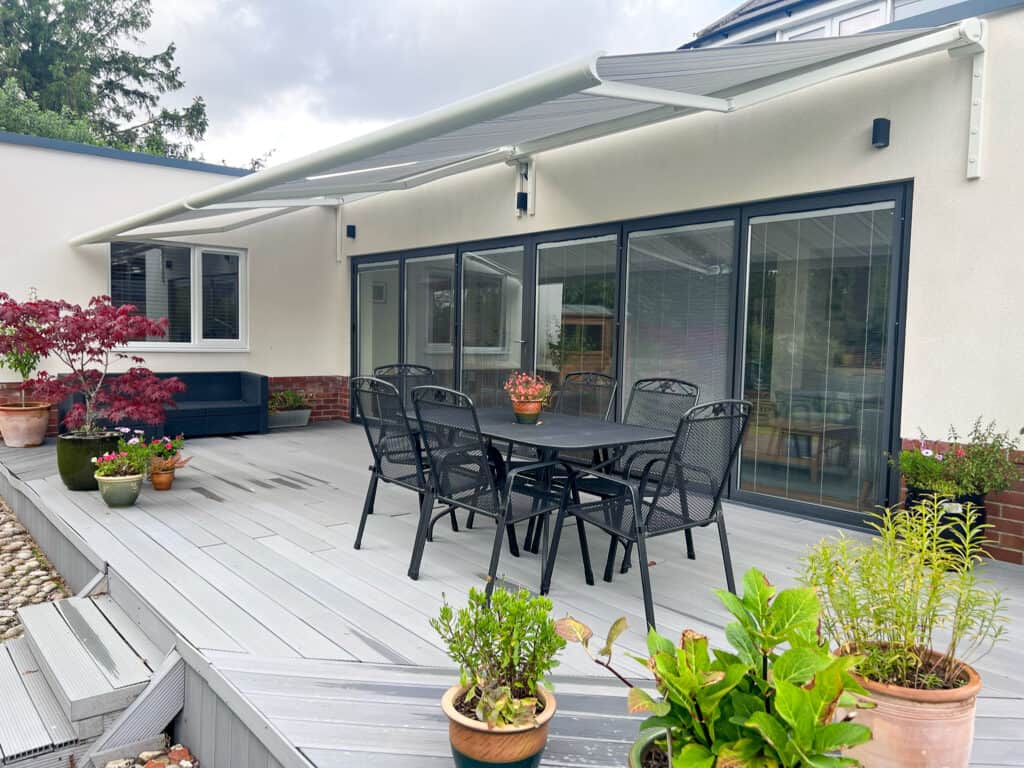
For many homeowners, a retractable patio awning fitted to the back of a property is unlikely to need planning permission, particularly if it is a modest, domestic awning used for garden shade. Awnings are commonly treated as a minor external addition, especially when they are retractable and do not permanently enclose a space.
This means that if you live in a modern home outside a conservation area and you want a made-to-measure awning over your patio, terrace or bifold doors, the process is often straightforward. A professionally installed awning can usually be fitted without the same level of planning complexity as a permanent extension, garden room or structural canopy.
However, “usually” is the key word. Planning rules are not always the same for every property. The location, age and status of the building matter. Winchester also has many older homes, character properties and protected areas, so it is always sensible to check before installation if there is any doubt.
When Might Planning Permission Be Needed for an Awning?
Planning permission may be needed where an awning has a noticeable impact on the external appearance of the building, is being installed in a sensitive location, or forms part of a commercial premises.
You may need to investigate planning permission if:
- Your property is in a conservation area
- Your home or business premises is listed
- The awning is being fitted to the front elevation of the building
- The awning is very large or visually prominent
- The awning projects over a public pavement or highway
- The awning is for a shop, restaurant, café, salon or other commercial premises
- The awning includes business branding, logos or advertising
- The awning is part of a larger external alteration project
For most homeowners, the biggest planning considerations are conservation areas and listed buildings. For businesses, the key issues are usually shopfront design, public highway projection, branding and advertisement consent.
Awnings in Winchester Conservation Areas
Winchester has many beautiful and historic streets, including areas where the character of buildings and shopfronts is carefully protected. If your property is in a conservation area, additional planning controls may apply to changes made to the outside of your home or business.
This does not automatically mean an awning will be refused. In fact, a well-chosen awning can be very sympathetic to a period property when the design, colour, cassette, fixings and fabric are carefully considered. However, the local authority may want to ensure that the awning does not harm the character or appearance of the building or surrounding street scene.
This is particularly important if the awning is visible from the road, fitted to the front of the property, or installed on an older building with traditional features. In these cases, a subtle design is often best. Neutral or heritage-style colours, neat cassette systems and carefully positioned fixings can make a big difference.
If you live in a conservation area in Winchester, it is worth checking with Winchester City Council before ordering your awning. This is especially important if your property is part of a terrace, a period home, a historic shopfront or a building in a highly visible location.
What About Listed Buildings?
Listed buildings are treated more carefully because their special architectural or historic interest is legally protected. If your property is listed, you may need listed building consent before installing an awning, even if the awning is retractable.
This is because the installation may involve fixing brackets, drilling into external walls, changing the appearance of the building, or attaching equipment to historic fabric. Even small changes to a listed building can require approval.
For listed properties, the design of the awning matters. The fixing method, fabric colour, frame colour, projection, position and visibility should all be considered carefully. A more discreet awning, sympathetic colour palette and minimal visual impact will usually be more appropriate than a bold or highly modern design.
If your Winchester home or business is listed, you should seek advice before any work begins.
Do Commercial Awnings Need Planning Permission?
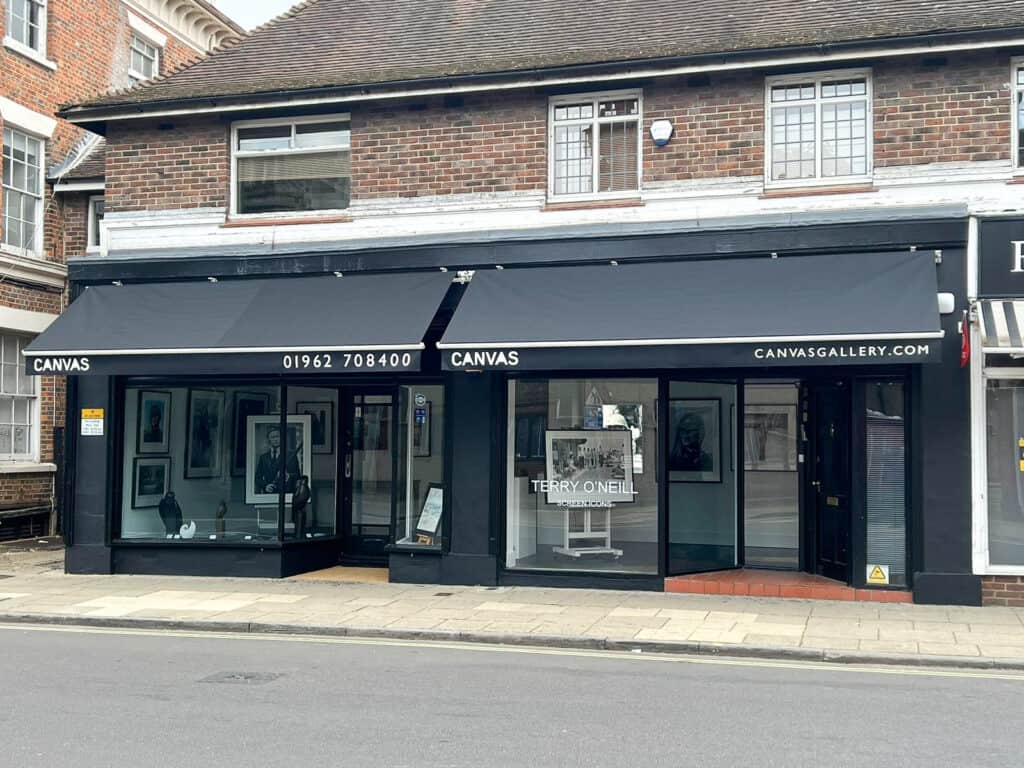
Commercial awnings often involve more planning considerations than residential garden awnings. This is because they are usually installed on shopfronts, restaurants, cafés, salons, pubs, hotels or offices, where they may affect the public street scene.
In Winchester, commercial awnings can be a brilliant addition to a business frontage. They can provide shelter, increase outdoor seating potential, protect displays from sun glare and make a premises more visible and welcoming. But because they are often visible from the public highway, planning permission may be required.
Commercial awnings may need permission if they change the shopfront, project over a pavement, are installed in a conservation area, or affect the appearance of a historic building. Traditional shopfronts in Winchester need particular care, especially in areas with older architecture.
A commercial awning should look like part of the building rather than an afterthought. The proportions, fabric, valance style, frame colour and branding should all work with the frontage. A well-designed awning can enhance a business premises, while a poorly chosen one can look too heavy, too bright or out of keeping.
Do Branded Awnings Need Advertisement Consent?
If your awning includes your business name, logo, slogan or printed branding, you may also need advertisement consent. This is separate from planning permission.
Advertisement consent can apply when signage or branding is displayed on the outside of a property. A printed shopfront awning, café awning or restaurant awning may be treated as a form of advertisement if it includes visible business branding.
This is particularly relevant for commercial awnings in Winchester, where businesses often want their awning to act as both a practical shelter and part of their shopfront identity.
If you are considering a branded awning, it is worth checking whether advertisement consent is needed before the fabric is manufactured. This avoids delays and ensures the finished design is suitable for the building and location.
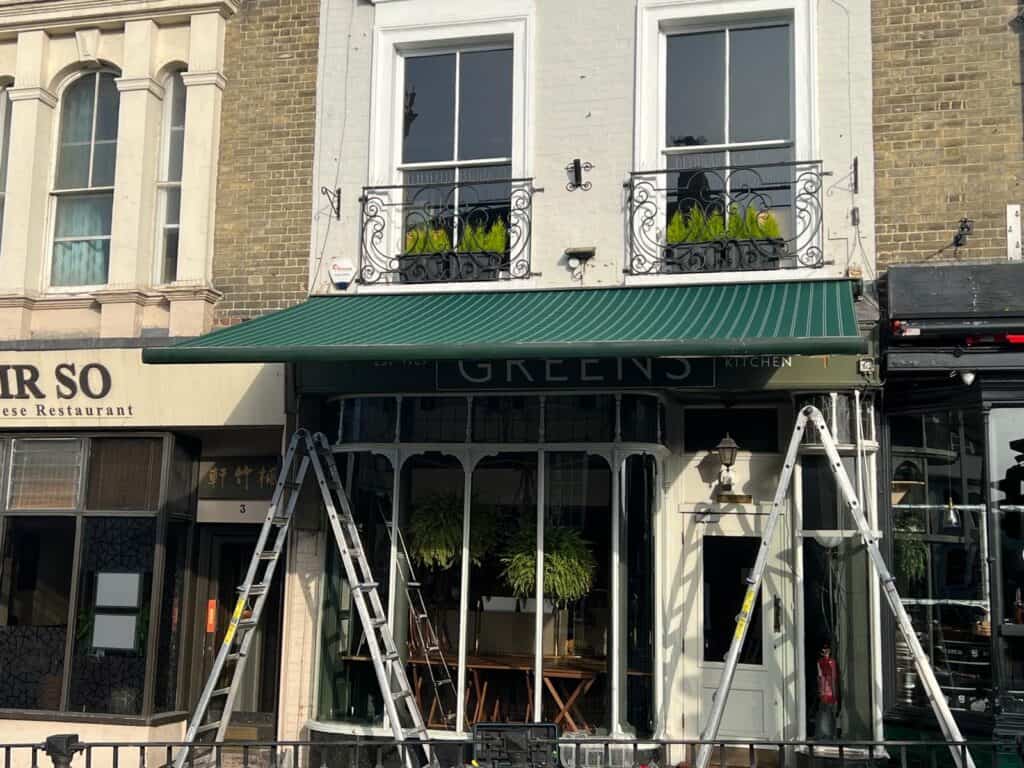
Can an Awning Project Over a Pavement?
If a commercial awning extends over a public pavement or highway, additional permissions may be required. This is because the awning could affect pedestrians, vehicles, sightlines, access and safety.
For businesses in Winchester city centre or village high streets such as Alresford, Stockbridge, Bishop’s Waltham or Petersfield, this is an important point. Awnings should be installed at a safe height, project appropriately and retract when needed.
Professional survey and installation are essential. The awning must be secure, suitable for the building, and positioned so it does not create a hazard. Wind sensors can also be useful for motorised commercial awnings, helping the awning retract automatically in unsuitable weather conditions.
Read a case study on a commercial awning recover in Alresford here.
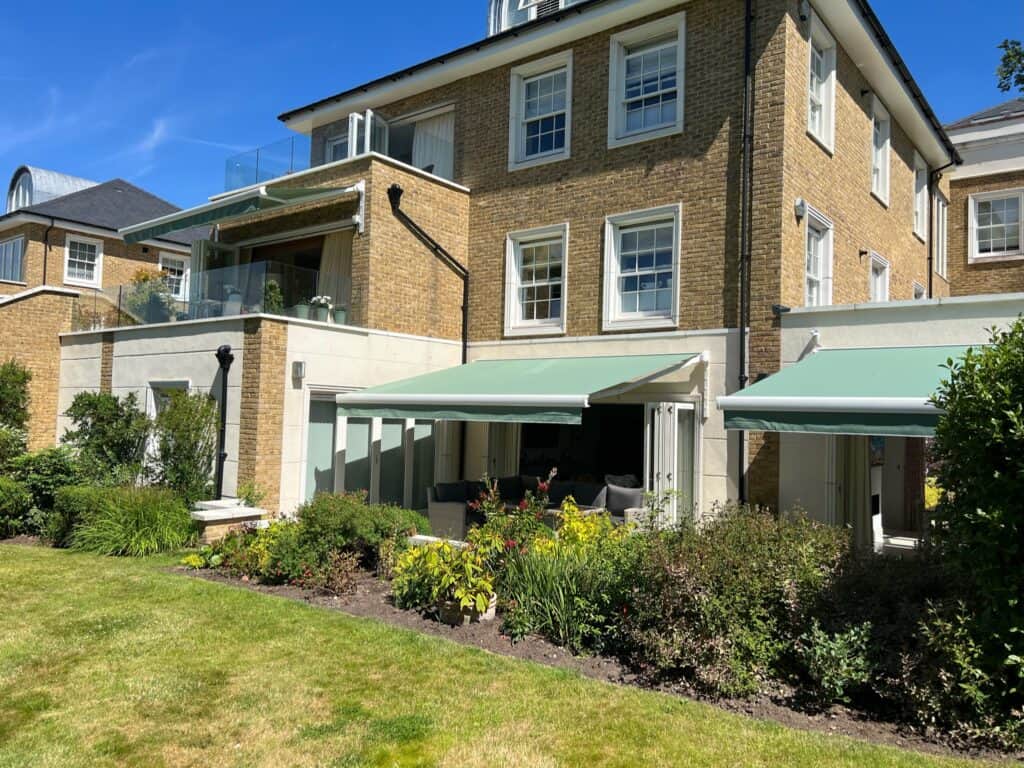
What Type of Awning Is Best if Planning Is a Concern?
If planning sensitivity is a concern, a retractable awning is often a better choice than a fixed canopy. Because it can be closed away when not in use, it usually has less permanent visual impact.
A full cassette awning can also be a good option because the fabric and arms are neatly enclosed when retracted. This gives a clean, tidy appearance and protects the fabric from the weather. For many Winchester homes, this creates a smart, high-quality finish without making the building look cluttered.
For period homes or conservation areas, fabric colour is especially important. Soft neutrals, greens, greys, creams and muted tones often work better than very bright colours. Frame colour can also be chosen to complement windows, doors, brickwork or render.
For commercial awnings, traditional-style valances and carefully considered branding can help the awning feel appropriate to the building.
Do Motorised Awnings Change the Planning Rules?
Motorised awnings are popular because they are easy to use and can be paired with remote controls, wall switches, smartphone control and weather sensors. In most cases, the fact that an awning is motorised does not automatically mean planning permission is required.
However, the installation may involve electrical work and external equipment, so it should be carried out properly. For commercial settings, motorisation can actually be helpful because the awning can be retracted quickly and safely when conditions change.
At Winchester Awnings, many of our awnings can be supplied with Somfy motorisation, wind sensors, sun sensors and smart home control options. This makes the awning easier to manage and helps protect it from being left open in unsuitable weather.
What Should You Check Before Installing an Awning in Winchester?
Before ordering an awning, it is sensible to check a few key things:
- Is the property listed?
- Is the property in a conservation area?
- Will the awning be visible from the road?
- Is the awning domestic or commercial?
- Will it project over a pavement or highway?
- Will it include logos, lettering or branding?
- Is the awning part of a wider building alteration?
- Are there any leasehold, landlord or management company restrictions?
Even where planning permission is not required, you may still need permission from a landlord, freeholder, housing association, property management company or business premises owner. This is especially common with flats, leasehold properties, listed buildings, shop units and commercial premises.
Why Professional Survey Matters
A professional awning survey is not just about measuring the width and projection. It also helps identify the best fixing points, the condition of the wall, the available height, the most suitable cassette style and whether there are any obvious planning or access considerations.
Awnings need to be installed securely because they are exposed to wind, rain and movement. The correct brackets, fixings and positioning are essential. Poorly installed awnings can be unsafe, difficult to use and less durable over time.
A professional survey also helps make sure the awning looks right. The cassette should sit at the correct height, the projection should suit the patio or seating area, and the fabric should complement the property. This is especially important in Winchester, where many homes and businesses have character features that need a more considered approach.
Choosing the Right Awning for Winchester Homes
For residential properties, the most popular awning choices are retractable patio awnings, full cassette awnings and motorised awnings. These are ideal for creating shade over patios, garden seating areas, bifold doors and south-facing windows.
Awnings are particularly useful for homes where the rear of the property gets too hot in summer. They can help reduce glare, protect indoor furnishings from UV damage and make outdoor dining more comfortable.
A high-quality Weinor awning can be made to measure, with a wide choice of fabrics, frame colours and optional extras such as LED lighting, heating, wind sensors and smart controls. This allows the awning to be tailored to the home rather than looking like a standard off-the-shelf addition.
Choosing the Right Awning for Winchester Businesses
For commercial properties, the best awning will depend on the building, brand and use. A café may need shade for outdoor tables, while a salon may want a fresh fabric recover to update its frontage. A shop may need a practical awning to protect stock from sunlight, while a restaurant may want to create a more inviting entrance.
Commercial awnings can be used for:
- Shopfront shade
- Restaurant terraces
- Café seating
- Salon frontages
- Pub gardens
- Hotel entrances
- Retail displays
- Customer waiting areas
In Winchester and surrounding Hampshire towns, the most successful commercial awnings are usually those that balance practicality with good design. The awning should support the business visually without overwhelming the building.
So, Do You Need Planning Permission for an Awning in Winchester?
For many domestic awnings fitted to the rear of a home, planning permission is often not required. However, you should always check if your property is listed, in a conservation area, highly visible from the road, or subject to additional restrictions.
For commercial awnings, planning considerations are more common, especially if the awning changes a shopfront, projects over a pavement or includes branding. Advertisement consent may also be needed for printed logos or business names.
The safest approach is to check early, choose a sympathetic design, and work with an experienced local awning company that understands both residential and commercial installations.
Winchester Awnings: Local Awning Advice and Installation
At Winchester Awnings, we supply and install high-quality made-to-measure awnings across Winchester and Hampshire. As a local independent business with over 30 years of experience in the blinds, shutters and awnings industry, we help homeowners and businesses choose awnings that are practical, attractive and suited to their property.
We can advise on awning style, fabric choice, cassette design, frame colour, motorisation, Somfy controls, weather sensors and commercial branding options. Whether you are looking for a retractable patio awning for your garden or a commercial awning for your shopfront, we can guide you through the options and help you make an informed choice.
If you are unsure whether your property may need planning permission, we recommend checking with Winchester City Council before work begins.
To discuss your awning project, contact Winchester Awnings for a free, no-obligation quotation. Email us at hello@winchesterawnings.com or call us on 01962736836
Frequently Asked Questions About Planning Permission For Awnings
Do I need planning permission for a garden awning in Winchester?
Usually, a retractable garden awning fitted to the rear of a home will not need planning permission, but you should check if your property is listed, in a conservation area or subject to extra restrictions.
Do awnings in conservation areas need planning permission?
They may do. If your property is in a conservation area, especially if the awning is visible from the road, you should check with your local Council before installation.
Do listed buildings need consent for awnings?
Yes, listed buildings often need listed building consent before an awning is fitted, even if the awning is retractable.
Do commercial awnings need planning permission?
Commercial awnings are more likely to need planning permission, particularly if they alter a shopfront, project over a pavement or are installed in a conservation area.
Do branded awnings need advertisement consent?
If an awning includes a business name, logo or printed branding, advertisement consent may be needed as well as any planning permission.
Can Winchester Awnings advise on planning permission?
Winchester Awnings can advise on suitable awning styles and design considerations, but formal planning advice should always be confirmed with Winchester City Council.